
A well-placed pond adds water access, wildlife habitat, and visual appeal to rural property in North Georgia. Pond excavation involves digging a basin, shaping the banks, and managing drainage so the pond holds water year-round without eroding or silting in. The work accounts for land slope, soil type, and natural water flow to create a pond that stays full and remains functional over time.
Tines & Timber Development and Land Management handles pond excavation across North Georgia and surrounding areas, working on agricultural land, residential acreage, and properties used for recreation or livestock. North Georgia terrain includes hills, clay soil, and seasonal rainfall patterns that affect pond placement and design. Excavation is tailored to your land's characteristics and intended use, whether you need a small recreational pond or a larger water source for irrigation or livestock.
Call today to plan your pond excavation in North Georgia.
How Excavation Shapes a Lasting Pond
When you schedule pond excavation in North Georgia, the crew uses an excavator to dig the pond basin to the planned depth, which is typically eight to twelve feet at the center for year-round water retention. Soil removed during excavation is used to build up the dam or spread across low areas nearby. The banks are sloped to prevent erosion, and an overflow spillway is cut to handle heavy rain without washing out the dam.
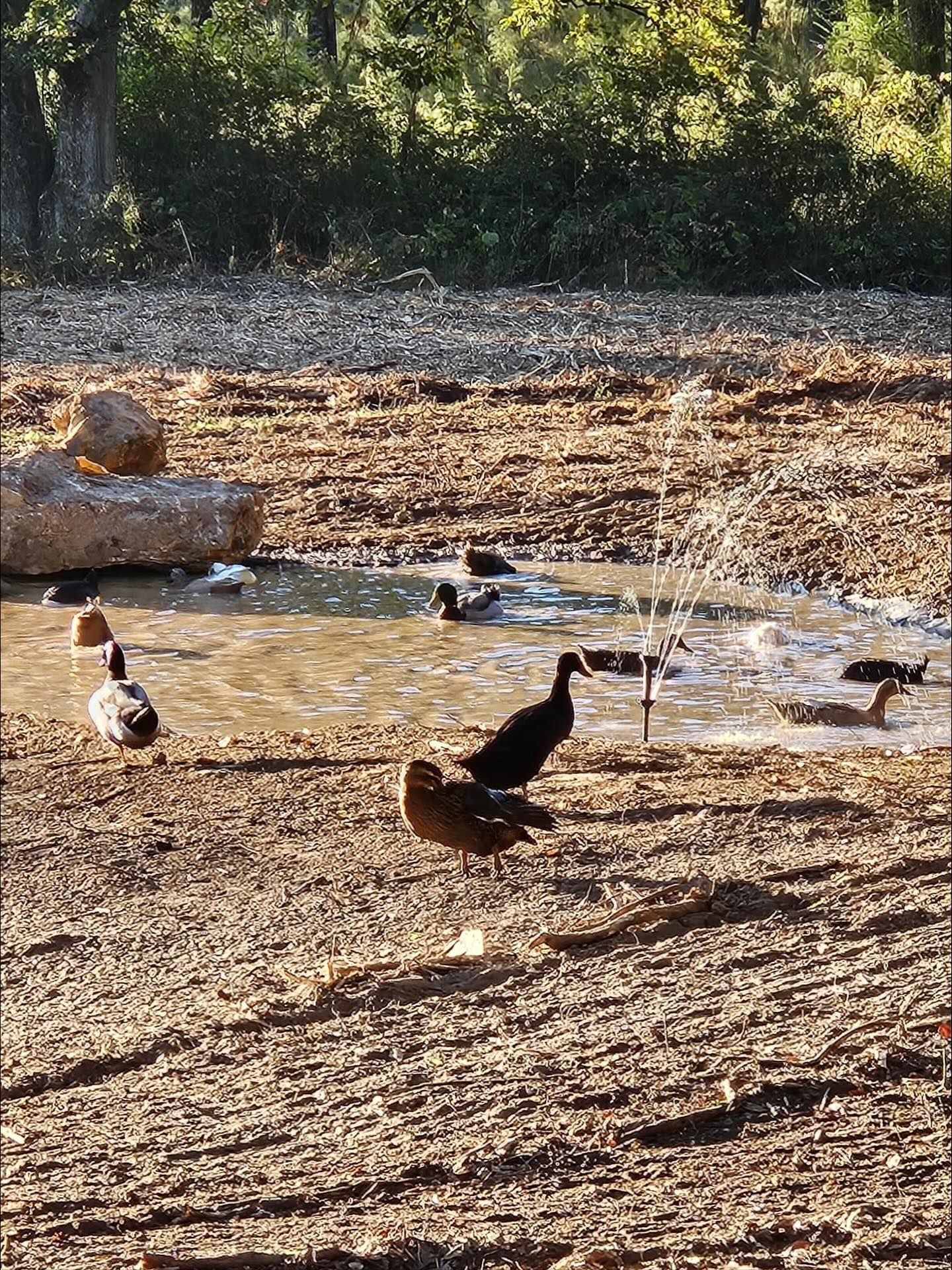
After excavation, you will see a basin with defined edges, a sloped interior, and a visible outlet for overflow. The pond begins filling from groundwater, runoff, or springs depending on your site. Water clarity improves over the first few months as soil settles, and you can add fish, plants, or aeration once the pond stabilizes.
This service can be combined with land clearing and grading if the site requires vegetation removal or access road work. Pond excavation does not include stocking fish, installing pumps, or adding decorative features unless arranged separately. The size and depth of the pond depend on your land's topography, intended use, and available water sources identified during site assessment.
Property owners often ask about pond placement, water sources, and maintenance needs, so these answers cover the practical concerns that come up before excavation begins.
What permits are needed for pond excavation in North Georgia?
Pond excavation adds functional water features to properties throughout North Georgia, and the work is tailored to your land's slope, soil, and intended use. Tines & Timber Development and Land Management handles projects from planning through excavation and site cleanup. Call (770) 733-8192 to discuss your pond excavation needs.